



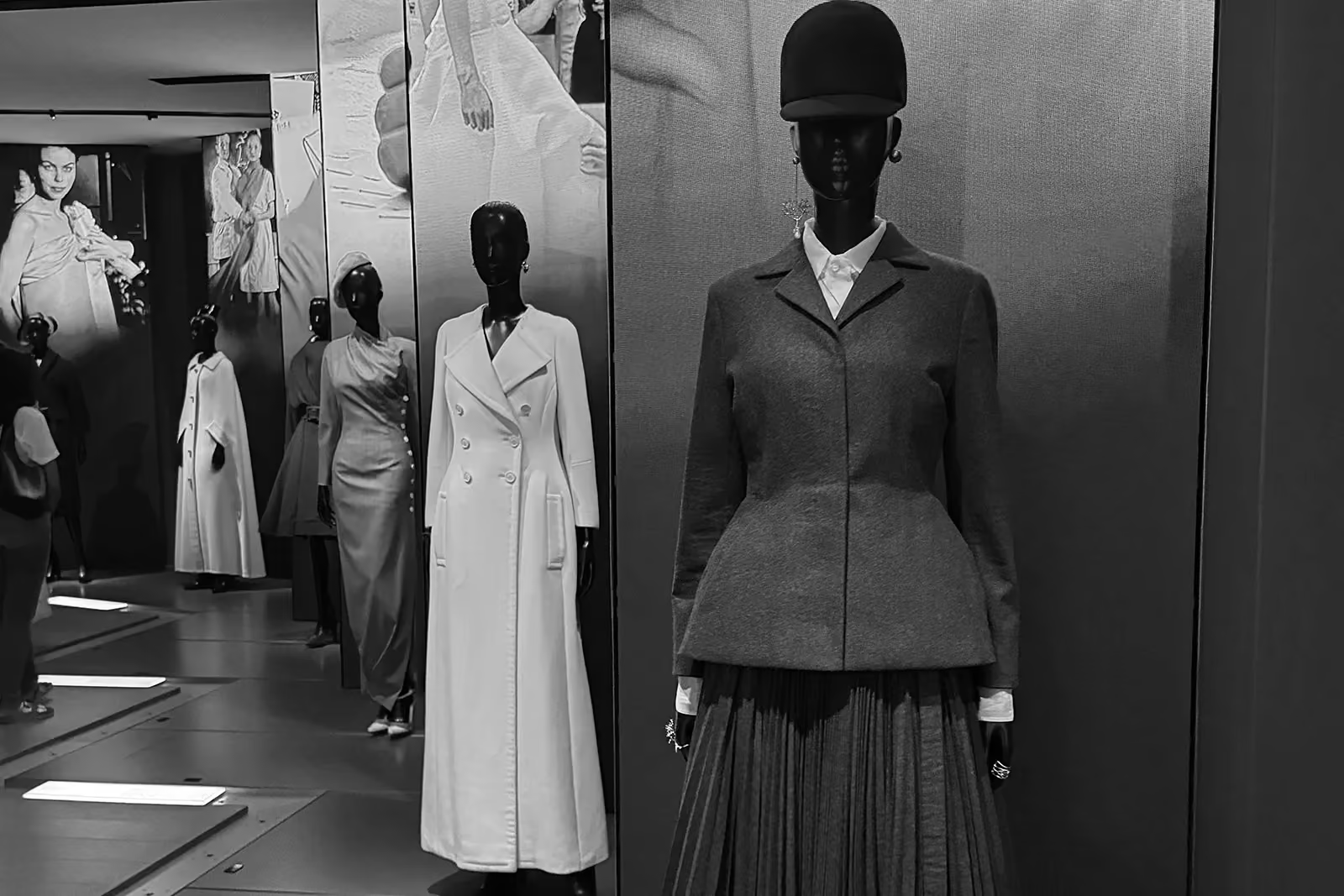
Did you know that fashion shows are a relatively recent invention?
From the very first fashion show to the fashion week as we know today, I'm going to tell you the how Paris became the capital of Fashion.
I. The invention of fashion shows
Fashion shows are a 19th-century invention. Before that, couturiers were considered mere executors (suppliers). At the time, fashion was not an art, but a service.
It was Charles Frederick Worth (1825-1895) who revolutionized fashion and invented the profession of “couturier” as we know it today. He is now considered the father of Haute Couture. Although he was British by birth, it was in Paris that he reinvented the profession of couturier.
Couturier: from worker to artist
Charles Frederick Worth reversed the relationship between customer and couturier: it was no longer the buyer who chose the shapes, fabrics, or colors, but the designer who created his own design and imposed his vision.
People no longer went to a simple tailor to order a garment; they went to “Worth” to acquire a style.
This affirmation by the designer is accompanied by another major innovation: signing garments. By sewing his name inside his creations, Worth invented the label and transformed each garment into a “signed piece,” comparable to a work of art. In doing so, he definitively established the couturier as an artist in his own right.
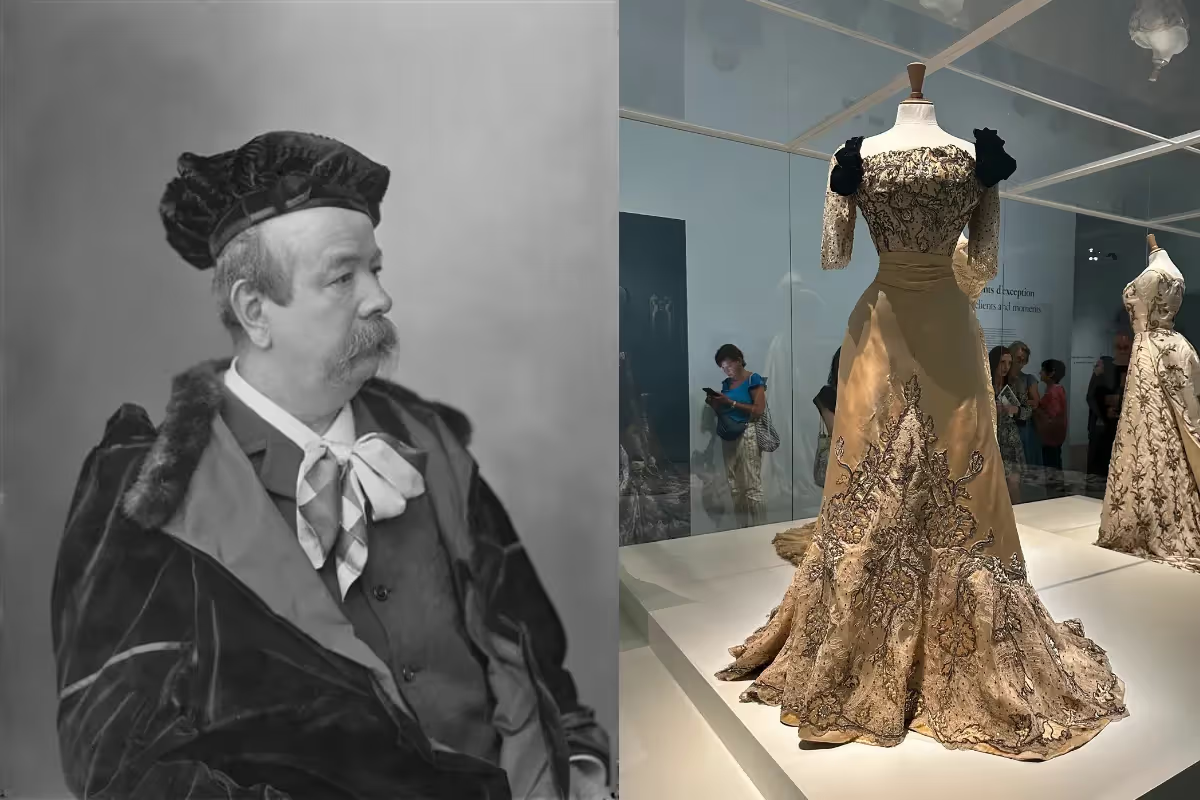
A Revolution in the fashion industry
Charles Frederick Worth did not merely introduce isolated innovations; he reshaped the entire structure of the fashion industry.
- He replaced wooden mannequins with living models, turning fashion presentation into a show, allowing clients to see how garments moved, fit, and expressed a way of life.
- This new mode of presentation naturally led to another breakthrough: the creation of fashion collections. Rather than producing garments one by one, Worth began designing cohesive series of pieces. His creations were then shown on moving models during carefully staged social events, establishing a rhythm that organized fashion around anticipation and renewal.
These innovations sparked interest among elites such as Empress Eugénie and the European royal courts. This positioned his Parisian house at the center of international attention. As a result, Paris emerged not just as the location of his atelier, but as the symbolic heart of global fashion, a status it would retain for the century to come.
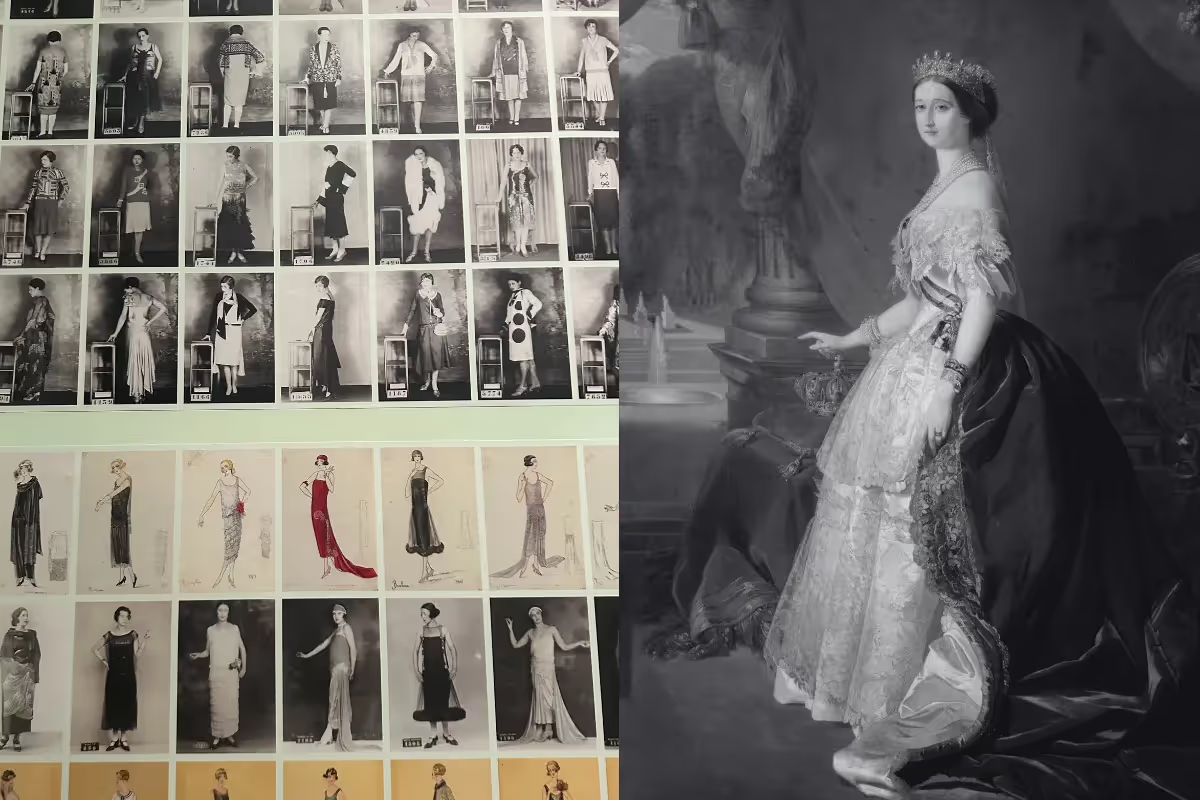
ii. The first Fashion week
Since Worth, several fashion houses had emerged and organized their own shows. At the time, these events were very private affairs : each fashion house organized its own, separated presentations in its salons for wealthy clients and a few journalists.
But everything changed in 1973 when the Fédération de la Haute Couture et de la Mode was created and decided to bring together for the first time, in a single official week Haute Couture, ready-to-wear, and men's fashion.
What is the French Couture Federation ?
The French Couture Federation was created by bringing together several existing professional organizations. But the true architect and founder was Jacques Mouclier.
Who is Jacques Mouclier?
He played a central administrative and diplomatic role in haute couture, coordinating designers’ egos, protecting their savoir-faire through legal means, and overseeing the complex logistics of an industry that was then a very closed environment.
In 1973, he successfully convinced the major fashion houses (which were very individualistic and often in conflict) to join forces and become stronger.
iii. The very first Paris Fashion Week
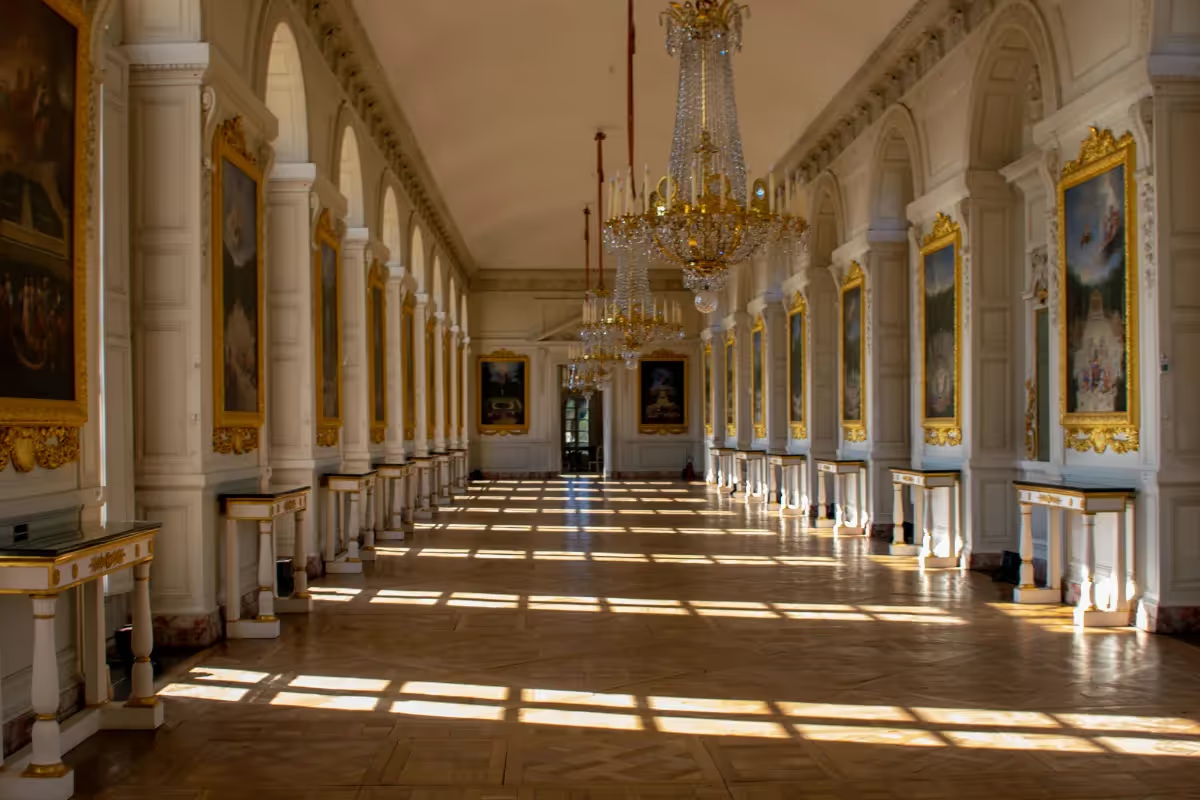
The very first event of this official Fashion Week was held at the Palace of Versailles on November 28, 1973.
Why Versailles?
In the early 1970s, the curator of Versailles, Gérald Van der Kemp, was desperately seeking funds to repair the roofs and restore the royal apartments. His wife, who had many connections in the United States, contacted Eleanor Lambert, the high priestess of fashion in New York.
Together, they came up with the idea of a prestigious charity gala to attract wealthy international donors.
How Eleanor Lambert revolutionized American Fashion
In 1943, Eleanor Lambert invented what she called “Press Week,” bringing all New York designers’ fashion shows together into a single, concentrated event to simplify the work of journalists.
The reason?
At the time, American fashion barely existed as an independent creative industry: department stores routinely sent buyers to Paris, purchased designs from houses like Dior or Chanel, and legally copied or adapted them for the American market.
World War II abruptly ended this system. With Paris occupied and travel impossible, American buyers and journalists were cut off from French fashion.
Lambert understood that without immediate visibility and recognition for local designers, the American textile and fashion industry risked collapse. By turning fashion into a mass event—nearly fifty shows presented over five days—she made it impossible for the press to ignore American talent, forcing editors to view designers such as Claire McCardell and Bill Blass with the same seriousness traditionally reserved for Parisian couture.
The Battle of Versailles
With the help of this experienced publicist, the Van der Kemp family, and the assistance of diplomat Jacques Mouclier the very first Paris Fashion Week show in Versailles came to life. They decided not to hold a simple fashion show, but rather a friendly competition:
- Five established French designers: Saint Laurent, Cardin, Givenchy, Dior, and Ungaro
- Five American designers: Halston, Oscar de la Renta, Anne Klein, Bill Blass, and Stephen Burrows
Jacques Mouclier saw this event as the ideal launch for the very first edition of his “Fashion Week”. It gave immediate prestige to the event, which would soon become a must-see.
A turning point in fashion representation
The American designers transformed the runway into a true performance. They introduced music and choregraphy, notably with the live performance of the singer Liza Minnelli. They brought a show with high energy, contrasting with the rigid and silent conventions of Parisian couture shows. The event was also groundbreaking for its diversity: the Americans featured around ten Black models, an unprecedented visibility in such a prestigious and traditionally conservative setting.
In comparison, the French designers presented highly theatrical haute couture weighed down by complex sets that malfunctioned on stage.
More than a simple competition, the evening revealed a shift in fashion itself — toward dynamism, inclusivity, and spectacle — laying the cultural foundations of the contemporary fashion show and the global fashion media system we know today.
A Tradition to This Day
Since then, Paris Fashion Week has become an unmissable event in the world of fashion. Today, it stands as a global institution, hosting runway shows twice a year that bring together haute couture, women’s and men’s ready-to-wear, attracting designers, buyers, media, and celebrities from around the world.
Much like the very first show at the Palace of Versailles, the runways now take place in iconic venues such as the Grand Palais, the Carrousel du Louvre, and the Cour Carrée of the Louvre, adding an extra touch of glamour to the event.
Today, there are more than a hundred international Fashion Weeks, but Paris remains among the most prestigious, alongside the other pioneering cities of New York, London, and Milan.
Follow our Parisian adventures!
.png)



-100.avif)



.avif)
.svg)
.svg)
.svg)
.svg)