


Did you know there’s a Roman amphitheater in the middle of Paris? Tucked away in the 5th arrondissement, the Arènes de Lutèce is one of just a few remnants of the Roman presence in Paris. This echo of ancient Paris is free to enter and is a must-see if you are exploring the Latin Quarter of Paris.
The History of the Arènes de Lutèce
Roman Origins
The area that is now Paris was settled in the 3rd century BCE by a Celtic tribe called the Pariisi, giving our city its name. But between the 1st century CE and the 4th century CE, Paris was a Roman town. The Romans called it Lutetia, and settled primarily on the Île de la Cité and the Montagne Sainte-Geneviève, in what is now known as the Latin Quarter. It was there, slightly removed from the city center, that they built an arena for gatherings and entertainment.
The amphitheater of Lutetia was a mixed-use arena, the stage for gladiator fights and violent spectacle, but also for public gatherings and plays. Spanning 132 meters by 100 meters, it would have been able to hold over 15,000 spectators, almost the entire population of Lutetia. In the 3rd century, the arena was partially destroyed and, after a brief revival during the Merovingian era, eventually fell into ruin.
Uncovering the Arena
Over the following centuries, the Roman arena was buried and many of the stones were used to build new things. The exact location was lost to history until 1869, when the ruins were uncovered by an engineer named Théodore Vacquer. During the massive urban remodel of Paris under Baron Haussmann, parts of the 5th arrondissement were demolished to make way for wider streets, taller buildings, and sewer systems, leading to the arena’s discovery.
The urbanization projects of the late 19th century transformed the city, and 20,000 buildings were demolished to make way for the redesigned streets. In the 1880s, the Arènes de Lutèce were in danger of being lost completely. Several intellectuals, among them Victor Hugo, implored the Municipal Council to excavate and preserve the arenas for posterity.
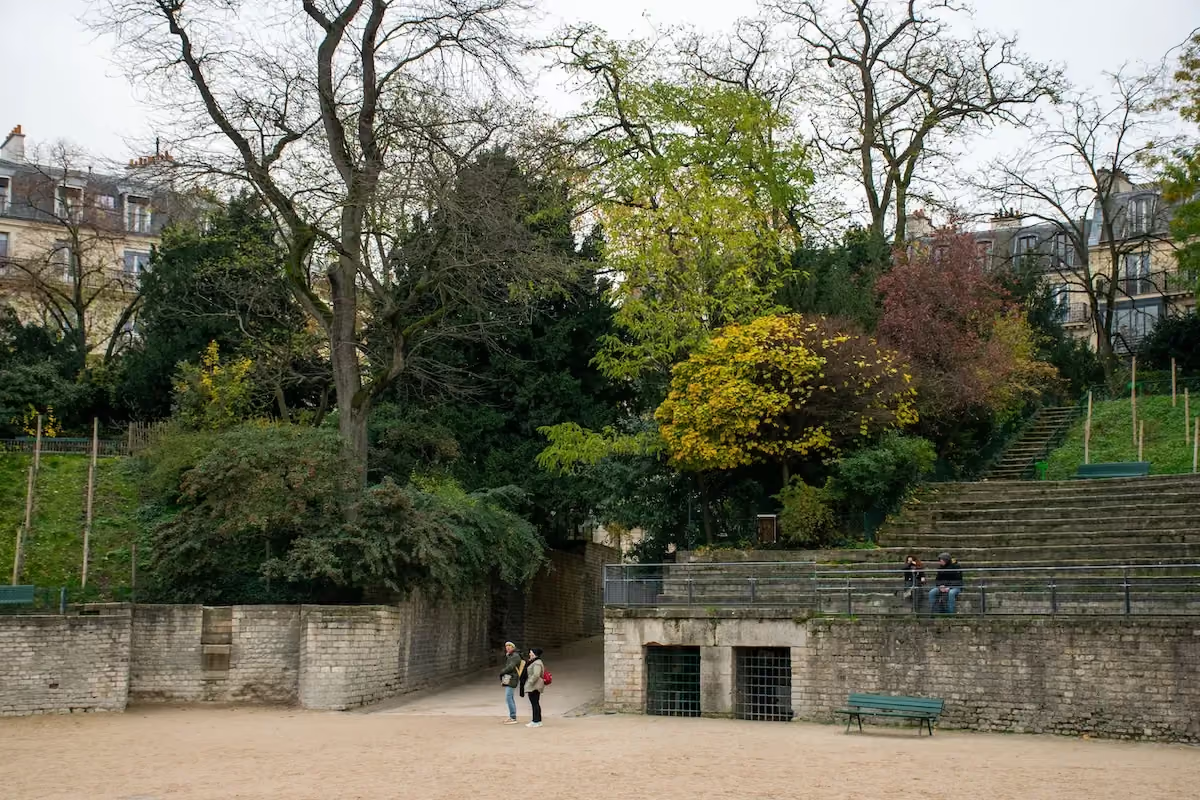
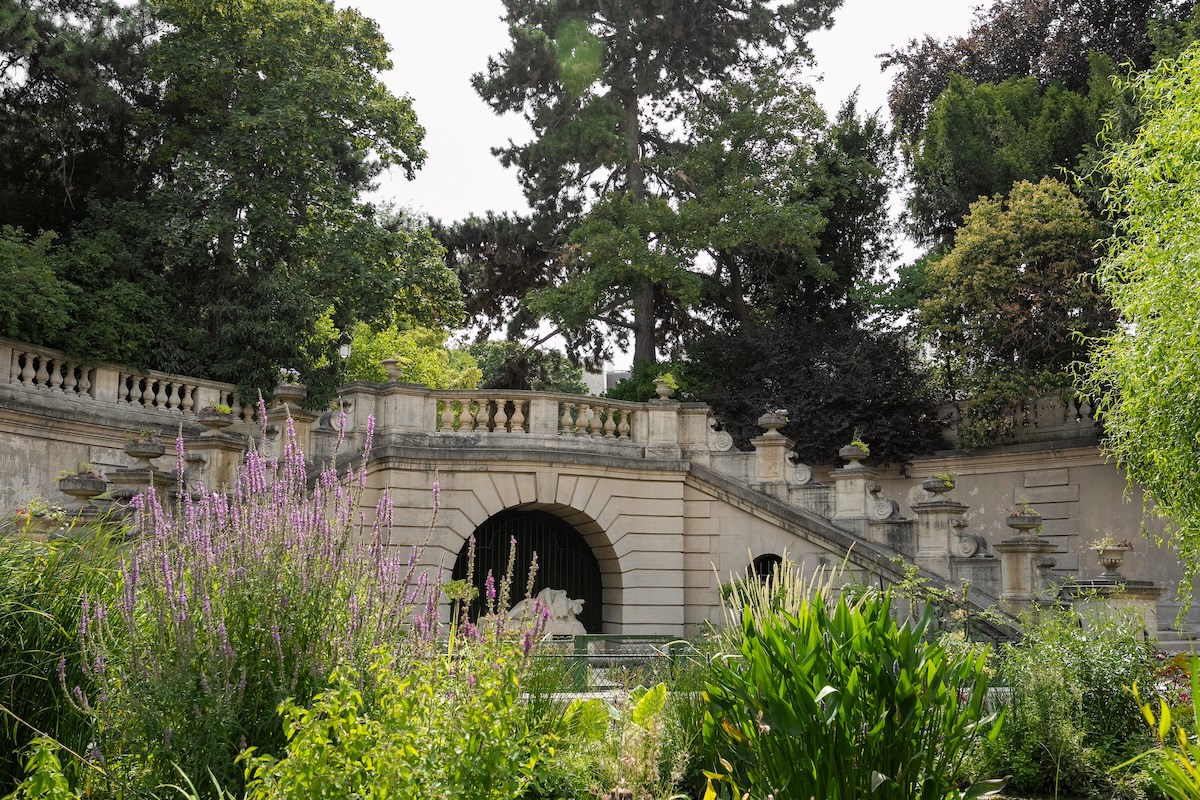
The arenas were eventually developed into the park you see today. The preserved sections include the base of the arena, stage platform, and several niches, including a dressing room and animal cages. Where the buildings meet the park space, you can imagine the podium of the arena, which was indeed destroyed to make way to construct Rue Monge.
Visiting The Arènes de Lutèce
A Tranquil Respite
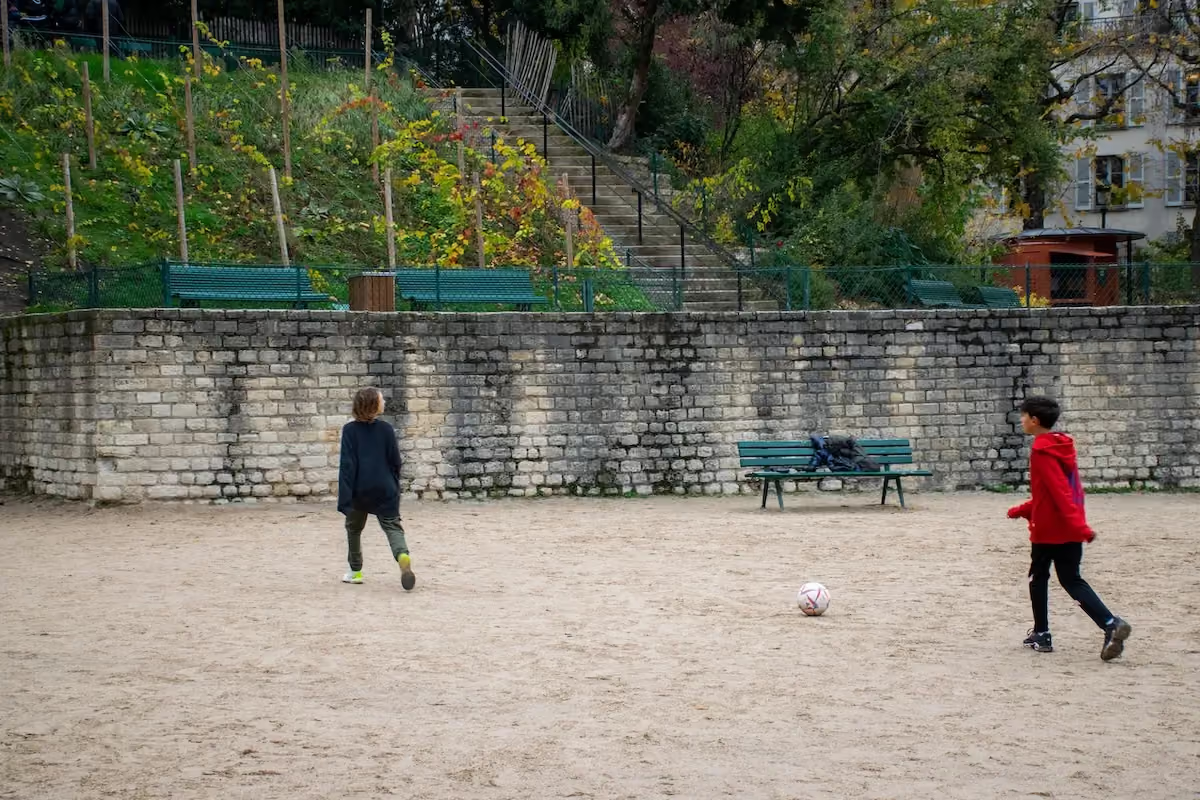
Nearly 2000 years after it was built, the Arènes de Lutèce serve a similar purpose today, but without gladiators of course. Surrounded by the Square Capitan, locals come to the arena to stroll, picnic, and play football or pétanque. You might also see grapevines growing along the terraced sides of the arena. Since 2021, the organization Les Clos des Arènes have tended to 200 feet of vines, contributing something unique to the biodiversity of the park.
Paris and Rome are not only sister cities, but they are exclusively twinned with each other; since 1956, Rome and Paris have been in a twinning agreement, and have collaborated on various cultural programs in their respective cities, including events at the Arènes de Lutèce.

How to Get There
The Arènes de Lutèce is hiding in plain sight, up an unassuming lane right off the main street of Rue Monge. To get there by public transit, take the Métro line 7 to Place Monge station and follow signs towards the Rue de Navarre exit. You’ll know you’re on the right track when you see that the exit itself mimics Roman-style architecture. Turn left out of the station and walk uphill on Rue de Navarre until you see the entrance to the Square des Arènes de Lutèce on your left.
You can also reach the arena from the Jussieu Métro stop, served by lines 7 and 10. From the exit, turn left on Rue Linné, and then turn right on Rue des Arènes until you reach the park entrance on your right.
Want to know more about the Latin Quarter? From Roman settlement, to the intellectual center of Europe, to the quirky student area it is today, uncover the layers of history with a guide! Book your Latin Quarter walking tour with Dayin!
Follow our Parisian adventures!