


By now you’ve probably seen the photos and headlines: burning cars and trash cans, police deploying tear gas, broken windows and boarded-up shops. It looks as though Paris is burning. But what’s really going on, and is it as bad as it seems? Here’s our perspective, as people who live in Paris and work with visitors every day in the heart of the city.
Below is some detailed information about the protests, why they are happening, and what to expect in the coming weeks. But here’s the TL;DR: You do not need to (nor should you) cancel your trip to France. Tourist sites remain open, and daily life continues as normal in most areas, and we are thrilled to welcome you and show you around Paris!
This is a developing story and this article will be updated when relevant information becomes available. Check a local news source for the latest updates.
What’s going on in France?
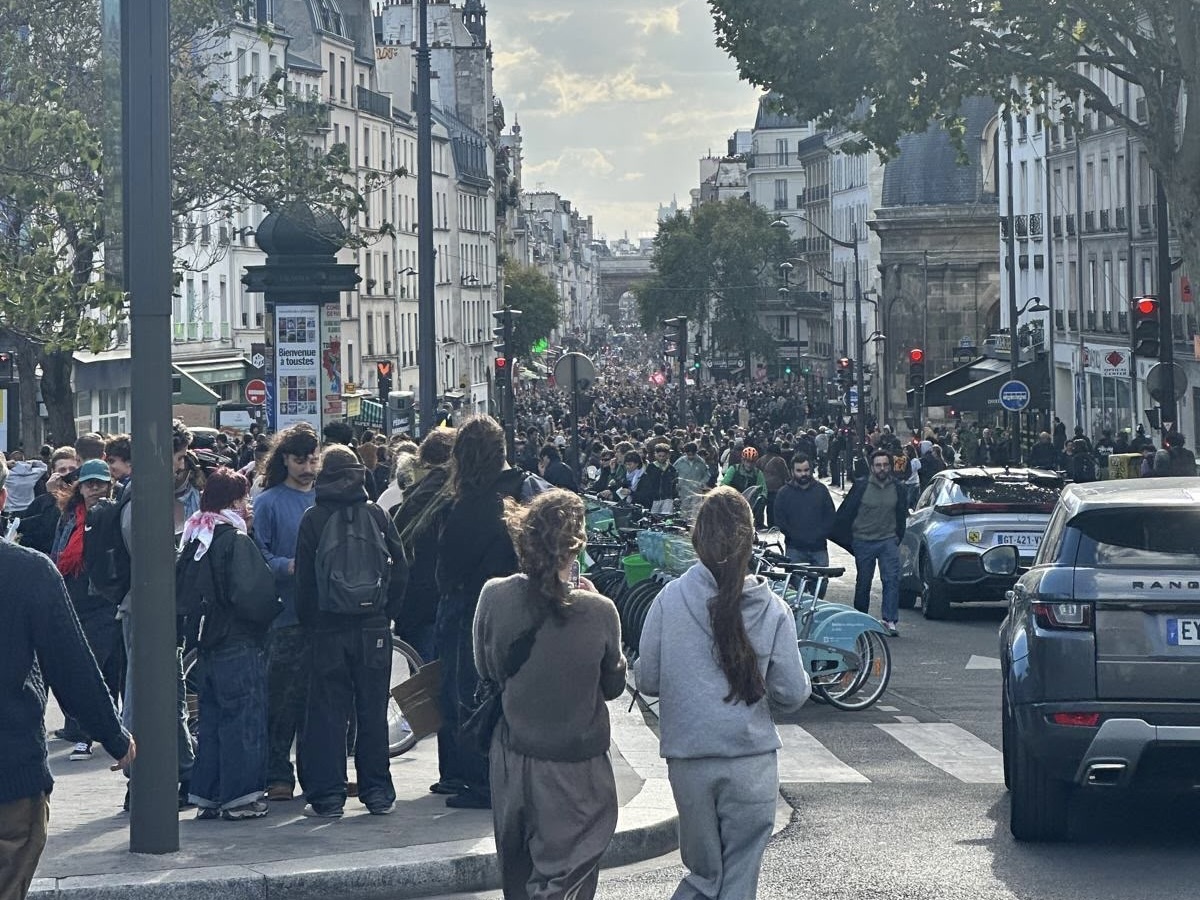
On October 17, a large-scale organized demonstration of students, teachers, and other labor groups and organizations, including the gilets-jaunes, took place, mostly around République, Bastille, and Place de Clichy. Throughout the afternoon, riot police (known in France as CRS), surrounded the protest, deployed tear gas, and charged at the crowds. While many people experienced a peaceful march, the evening devolved into property destruction and looting of shops.
Why are the protests happening?
The current wave of protests started in September at a high school in the suburbs of Paris, and quickly spread to high schools around France. Students are protesting deteriorated conditions, including reports of absent teachers, overcrowded classrooms, structural damage, rats and other pests, and extreme temperatures that old buildings cannot handle. The students are demanding more funding for their buildings, sufficient teachers and administrators, and an end to Parcoursup, the university admissions platform which, students argue, makes it more difficult to access higher education.
In the recent demonstration on October 17, the students were supported by university students, parents, teachers, farmers, and labor unions. The gilets jaunes, who led demonstrations throughout 2018 against rising fuel costs, were also in the streets to protest the rising cost of living and stagnant wages. These protests are being compared to a larger "gen Z protest movement" currently happening throughout Europe.
Are the protests violent?
The protests are organized to be nonviolent; on the contrary, protests can be moments of collective expression, solidarity, and even joy. There have been clashes between protesters and police that have resulted in injuries and thousands of arrests, particularly of high school students, which has triggered a strong backlash. Heavy police response to protests is expected and increases tension, but organizers have indicated they will continue to exercise their right to protest until their demands are met by the French government.
The French have a word for people who take advantage of protests to destroy property and loot businesses: casseurs. Their actions are not supported by the vast majority of demonstrators.
If you're coming to Paris, here's what you should know
Potential upcoming marches:
- Saturday, October 24: Demonstrations planned between Bastille and Opéra and between Bastille and Nation. Avoid those areas and the main streets between them (Grands Boulevards, Rue du Faubourg Saint-Antoine, Boulevard Voltaire). Check the RATP or Île-de-France Mobilités transit apps for updated information about closures and delays on transit.
- Saturday, October 31: Possible demonstrations taking place in the main squares of Paris.
- Thursday, November 5: There has been talk among organizers of a general strike on Thursday, November 5th if the demands of the students are not met. If this is the case, expect public transit to be disrupted.
What travelers can expect:
Here's what to expect if there is a protest happening during your trip to Paris:
- Closed metro stations, particularly around République, Bastille, and the Chatêlet/Les Halles area
- Smaller, student-led protests in front of universities and schools around the city
- Possible curfew (couvre-feu) in the aforementioned hot spots, enforced by police
- Other metro closures on days where there is a legal, designated manifestation and march taking place
- Increased traffic jams due to street closures around protests
- Occasionally tear gas is released into Metro stations around the protest. Bring a surgical mask with you in case you need to cover your mouth for a few stops.
Should you cancel your trip to Paris?
We do not think you should cancel your trip to Paris. Many touristic areas of the city remain calm and life continues as normal. In general, we expect protest activity to calm down around the holidays before picking back up as the 2027 elections approach. Tensions within the country may remain a bit higher for the next few months, especially if the protesters’ demands remain unmet. Protests are organized and the route and time are announced in advance, so visitors will have enough time to change their plans for the day if necessary.
If you’re in Paris and a protest is taking place, spend your day in the tourist areas, such as around the Eiffel Tower, Left Bank, and Montmartre. Avoid the areas where a march is scheduled and other central areas, such as République, Bastille, Chatêlet, and surrounding areas. If you’d prefer not to be in Paris at all, that day might be great for a day trip! Disneyland Paris, Parc Asterix, Château de Fontainebleau, Versailles, and several small towns and natural areas are all accessible on the RER within a couple of hours.
Paris is a big city like any other, and the French have a long and proud history of protest and revolution. Millions of people live and work in the city and go about their daily lives during times of protest. As a visitor in Paris, you can still have a great trip! If there’s a demonstration happening during your travels, stick around your hotel or to the tourist areas, stay aware of your surroundings, and be ready to adjust your plans if necessary.
Follow our Parisian adventures!