

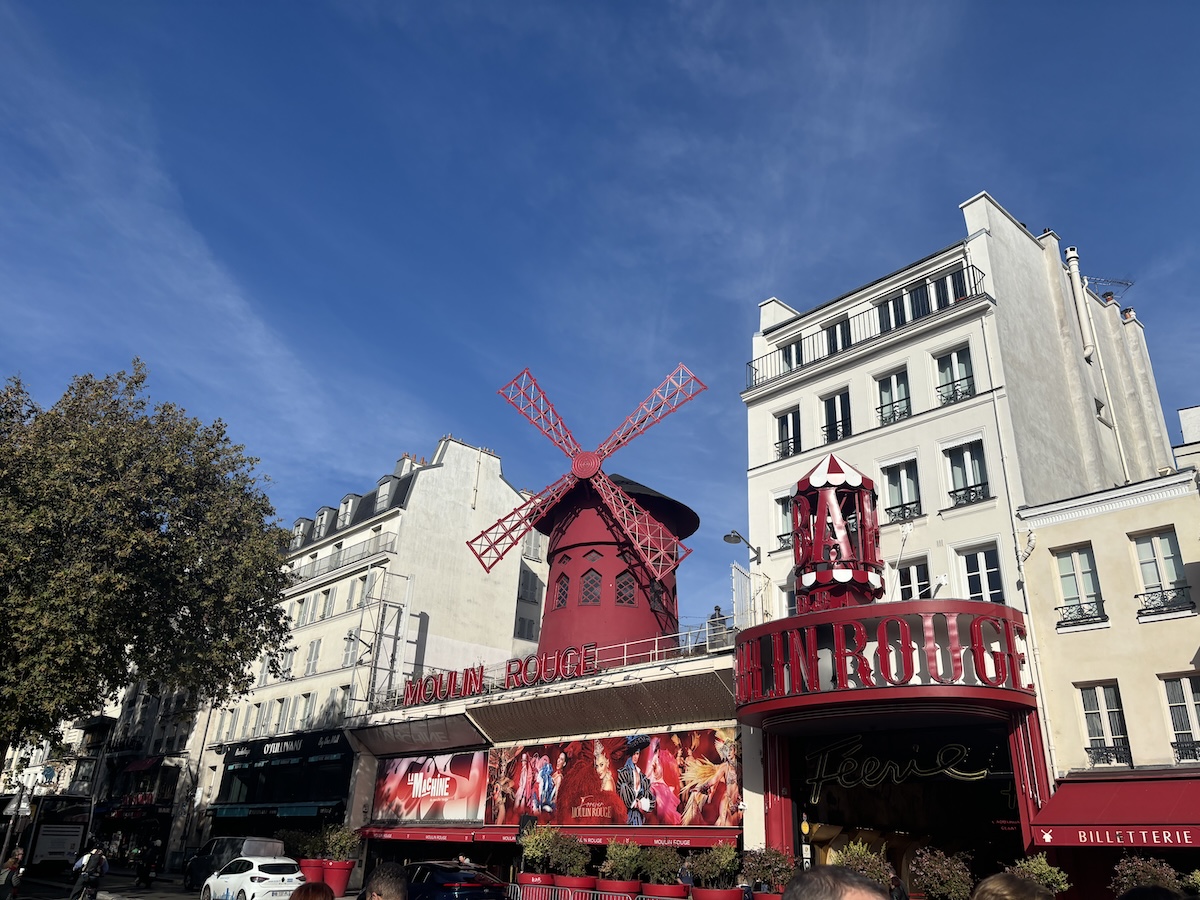
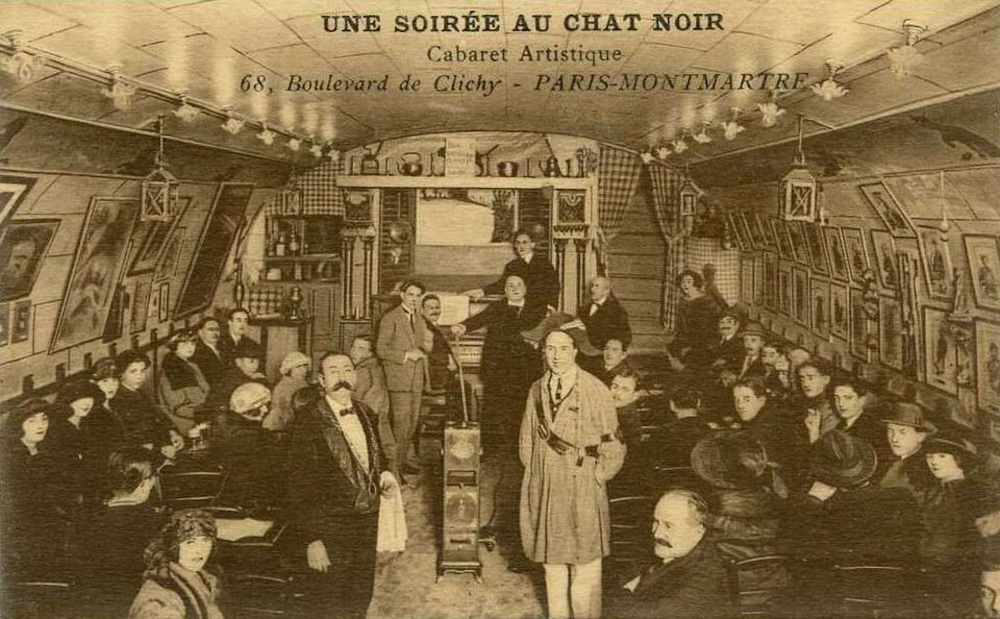
Long before the Moulin Rouge became a global icon, the story of the Paris cabaret began in the community of Montmartre. Until 1860, the village sat outside the city’s tax wall, where wine was cheaper. In 1881, Rodolphe Salis opened Le Chat Noir, widely regarded as the first modern cabaret: a place where poets, singers and satirists performed for a drinking crowd. Within a decade, the Moulin Rouge had opened its doors and the cabaret had become a defining part of Parisian nightlife. Visitors still flock to Montmartre to experience the spectacle and extravagance of the cabaret and the French Cancan dance at venues throughout Paris.
The birth of the Cabaret in Montmartre
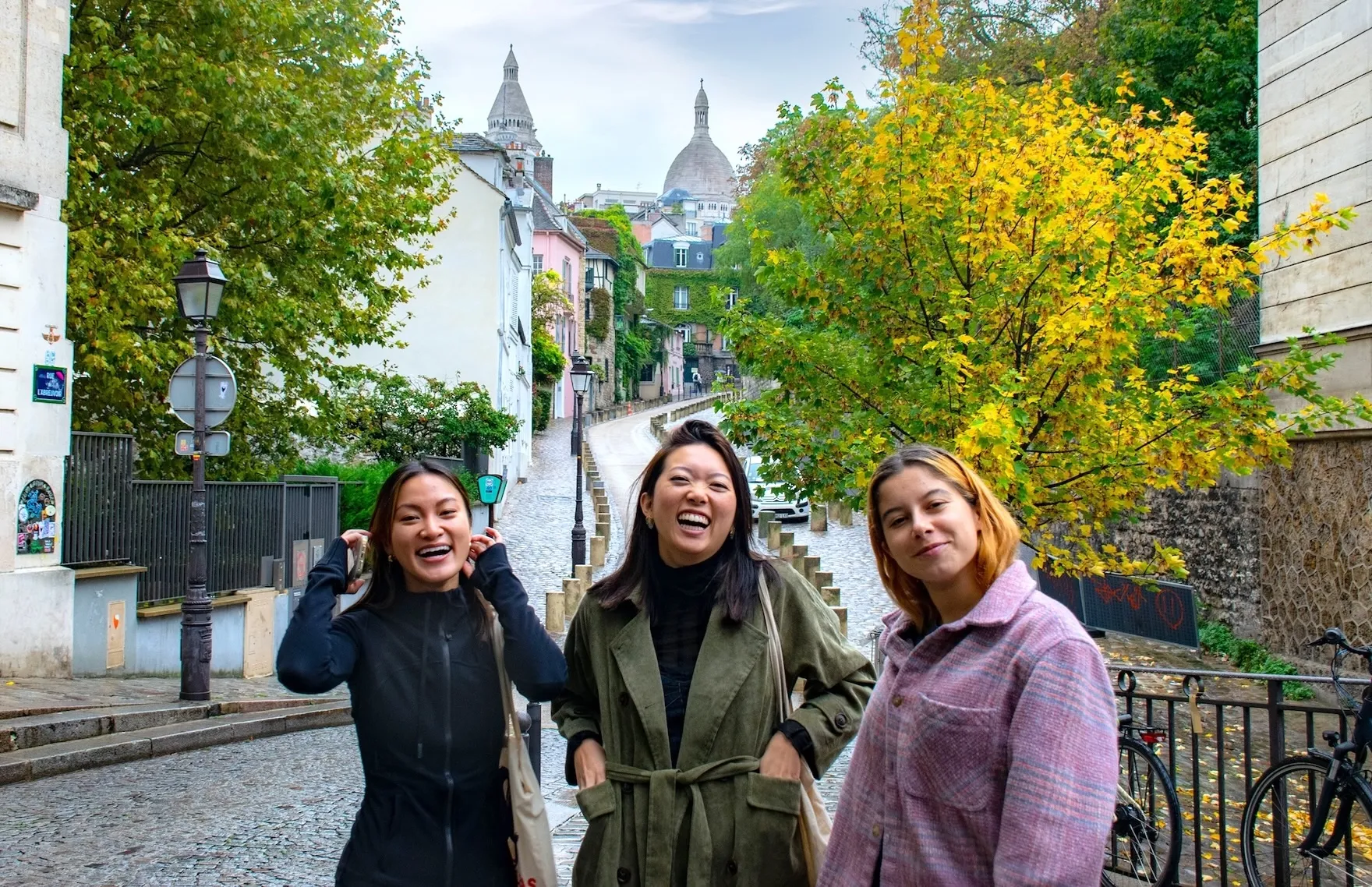
Let’s travel back in time to the end of the 19th century. During the Second Empire (1852-1870), Paris suddenly grew from its medieval borders to encompass several villages outside the city, doubling in size and nearly quadrupling its population. One of these villages was Montmartre, located on the hill overlooking Paris from the north. At the time, Montmartre was still a small community, with windmills and farms dotting the slopes, young artists seeking cheaper rent and artistic freedom, and wealthier Parisians enjoying cheap alcohol and relaxation, further from the rigid rules of Paris.
The outdoor cafés, or guinguettes, and cabarets were part of the fabric of this working-class neighborhood. Originally places to have a drink and a warm plate, much like a tavern, the cabarets attracted artists, poets, and musicians from the community. The neighborhood would be changed in 1881, when Rodolphe Salis opened his cabaret, Le Chat Noir. Instead of simple musical entertainment, Salis conceived a combination restaurant-performance hall boasting poetry readings, shadow theater, songs and comic sketches. Salis presented each performance himself, and he liked to use political satire in his introductions. It was a spectacle and the reason to come for a meal, not just happening in the background, and soon other establishments followed the trend.
The Birth of the Cancan and the Moulin Rouge
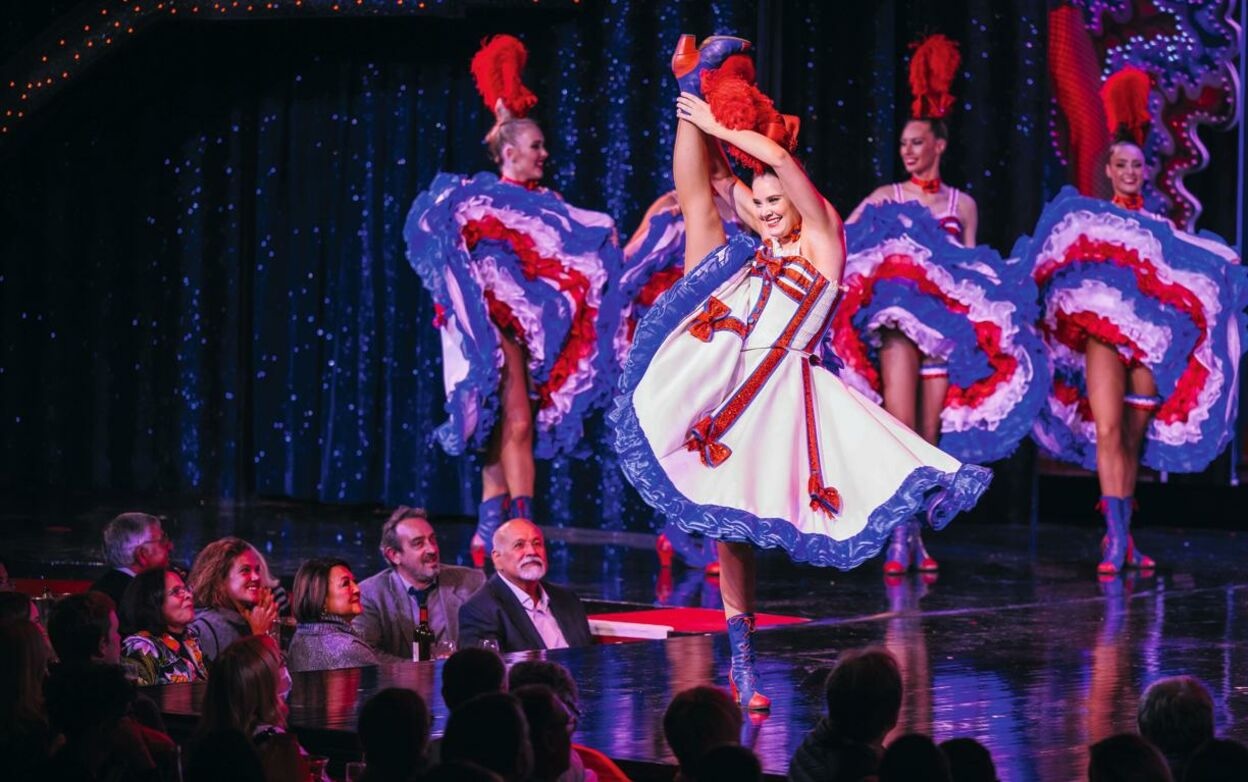
Nowadays, the Moulin Rouge is synonymous with the French Cancan dance, where women dance in a chorus line and scandalously kick up their legs. But the Cancan as we know it today is much older! The movements have their root in a social dance, the quadrille, that became popular in the 1820s and 1830s among working-class Parisians. To let off steam, men started dancing the quadrille alone in a chaotic burst of movement, called the cahut. But eventually, the women were sick of being on the sidelines. In a statement of liberation, women danced the frenzied steps as well, lifting their petticoats and kicking their legs, and the French Cancan was born.
The Cabaret shows with their Cancan dancers quickly became popular, and Montmartre was the epicenter of this new entertainment. In 1889, the Moulin Rouge opened on Boulevard de Clichy, its bright red windmill attracting an enthusiastic audience, avant-garde artists, and talented performers. One such performer was Louise Weber, known as La Goulue, who was a star of the French Cancan and a favorite subject of the artist Henri de Toulouse-Lautrec, who painted a series of posters to advertise the Moulin Rouge.

Want to learn more about Montmartre? Join a guided walking tour of Montmartre with Dayin! You’ll explore the backstreets of this Parisian neighborhood that still retains its village vibe, and hear the stories of the artists, musicians, and cafés who shaped the unique “Montmartrois” identity.
Cabarets Endure in Paris
Today, the adjacent neighborhoods of Montmartre and Pigalle remain the epicenter of the Paris cabaret scene. On Boulevard de Clichy, the Moulin Rouge draws crowds from all over the world to witness the iconic spectacle, with singing, acrobatics, and, of course, the Cancan! Down in Pigalle, the Folies Bergère, where the American dancer Josephine Baker often performed, is still operating today with theatre and and comedy shows. On the other side of the Montmartre hill, Au Lapin Agile retains the acoustic, intimate vibe of the original cabarets: music, French Chanson, and poetry in a small setting, no microphone or speaker system needed.
Beyond Montmartre, other venues keep the Paris cabaret tradition alive. In the Latin Quarter, the Paradis Latin is often called the city’s oldest cabaret, housed in a Gustave Eiffel-designed theatre. Today it stages L’Oiseau Paradis, a spectacle with dancers, acrobats, singers, and comedians. Near the Champs-Élysées, the Crazy Horse was founded in 1951 by avant-garde artist Alain Bernardin as a classic burlesque show, gradually evolving into a sleek “Totally Crazy” spectacle of precise choreography.
Over the past century, the cabaret has evolved from casual performances into a full-on spectacle, but it keeps the independent, subversive spirit of Montmartre alive in Paris.