


Much more than a place to grab coffee, Paris cafés are a quintessential part of the cityscape and Parisian culture. The ultimate third space, cafés have welcomed revolutionaries, writers, artists, and everyday people to discuss, debate, reflect, and most of all, engage with the world passing by. Sitting at a café should be on every Paris bucket list, so read this guide for a brief history of café culture through the centuries, plus tips on Parisian café etiquette.
Origins of the Café
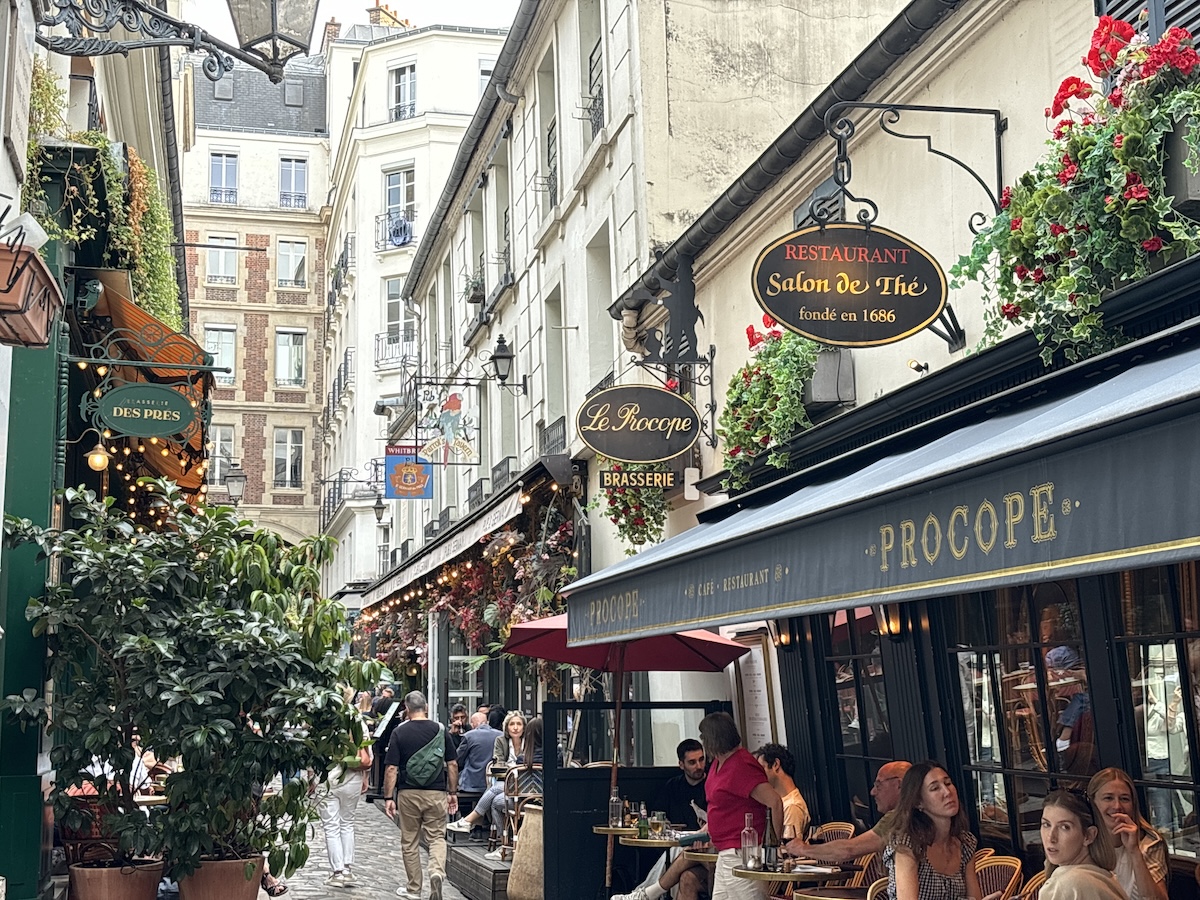
In 1686, Sicilian restaurateur Francesco Procopio dei Coltelli opened his café in Saint-Germain-des-Prés and was the first to serve coffee in small cups. Coffee was a relatively new commodity from the Americas, and it quickly became popular in Paris. Le Procope is recognized as Paris’s oldest operating café, and it's right in the heart of what would become the center of Parisian café culture.
As the number of cafés increased, they became the preferred place to meet for discussions about politics, news, literature, and gossip for educated and upper-class Parisians. The café functioned as public forum, incubator for new ideas, and refuge for artists and writers, cementing its importance as a third space for Parisians and visitors alike.
Evolution
Parisian Cafés, with their colorful awnings, sprawling terraces, and old-world charm, have become a quintessential part of the cityscape. In the 340 years since Le Procope opened, Paris cafés have played host to some of the most influential political, artistic, and cultural figures of France, as well as foreign avant-garde figures who flourished in Paris.
18th century
As new ideas emerged in the wake of Louis XIV's reign, Enlightenment thinkers would frequent cafés for intellectual discussion and political debate. Fueled by coffee, they could write and develop ideas about liberty, tolerance, and personhood. Cafés were the democratic alternative to salons, which were invitation-only and often exclusive. French "Lumières" like Voltaire and Rousseau enjoyed coffee and meals at Café Procope, steps from the intellectual Latin Quarter, as they developed the ideas that would spur on the Revolution.
French Revolution
Years of poor crop yields, inflation, and famine ushered in the era of direct political action as opposed to polite debate. Passionate Jacobins like Danton, Robespierre, and Desmoulins frequented cafés for political organization and meetings, and also used them as a stage, persuading passersby, journalists, and lawyers to join their cause.
19th century
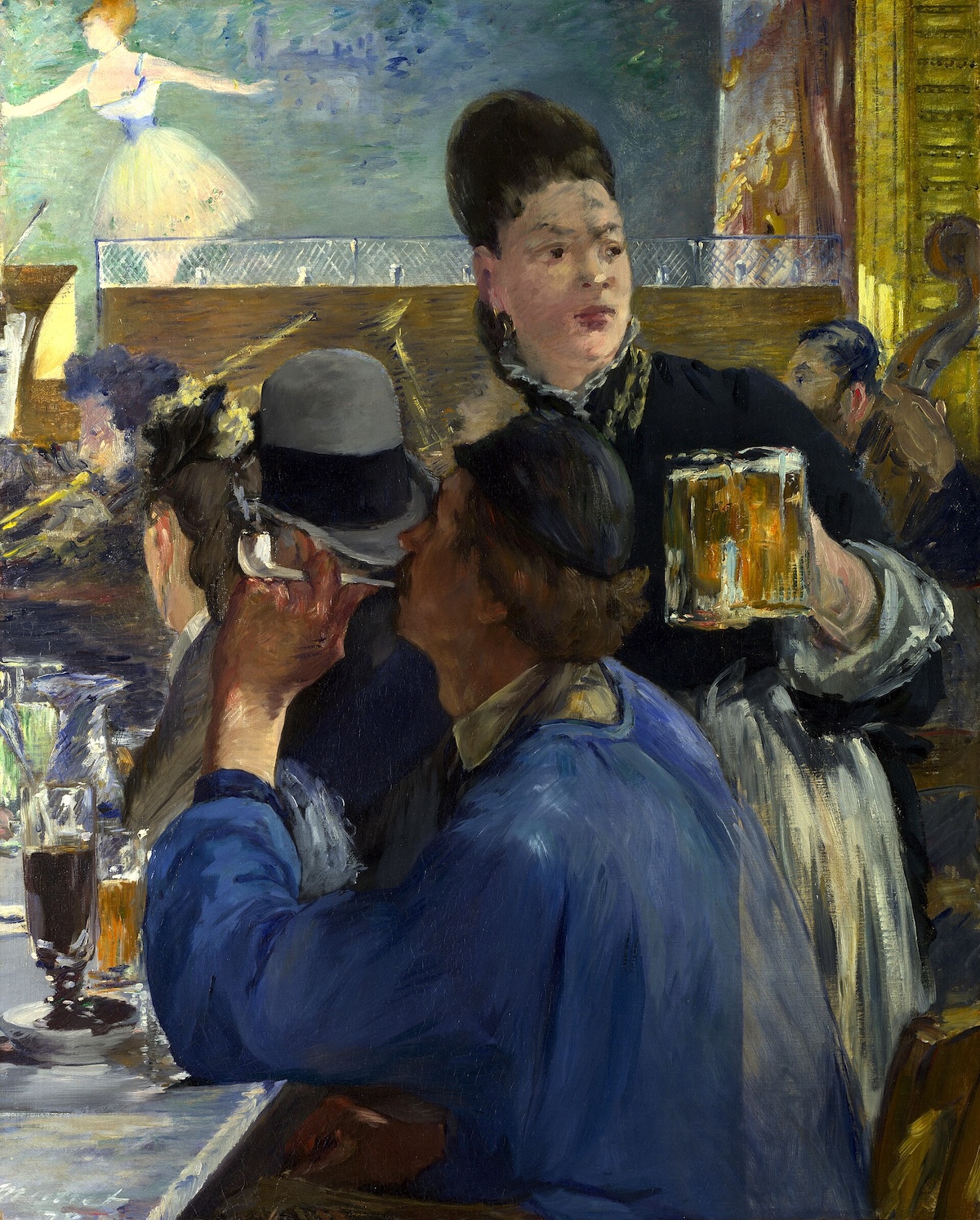
After the turmoil of the Revolution, power was consolidated in France. During the Restoration and Second Empire, and into the Belle Époque, literature, music, and art thrived in Paris, and cafés became a backdrop for cultural production. Immortalized in impressionist artworks, cafés were sanctuaries that provided writers like Balzac, Baudelaire, and Zola a space to work and to observe their subjects.
Interwar period
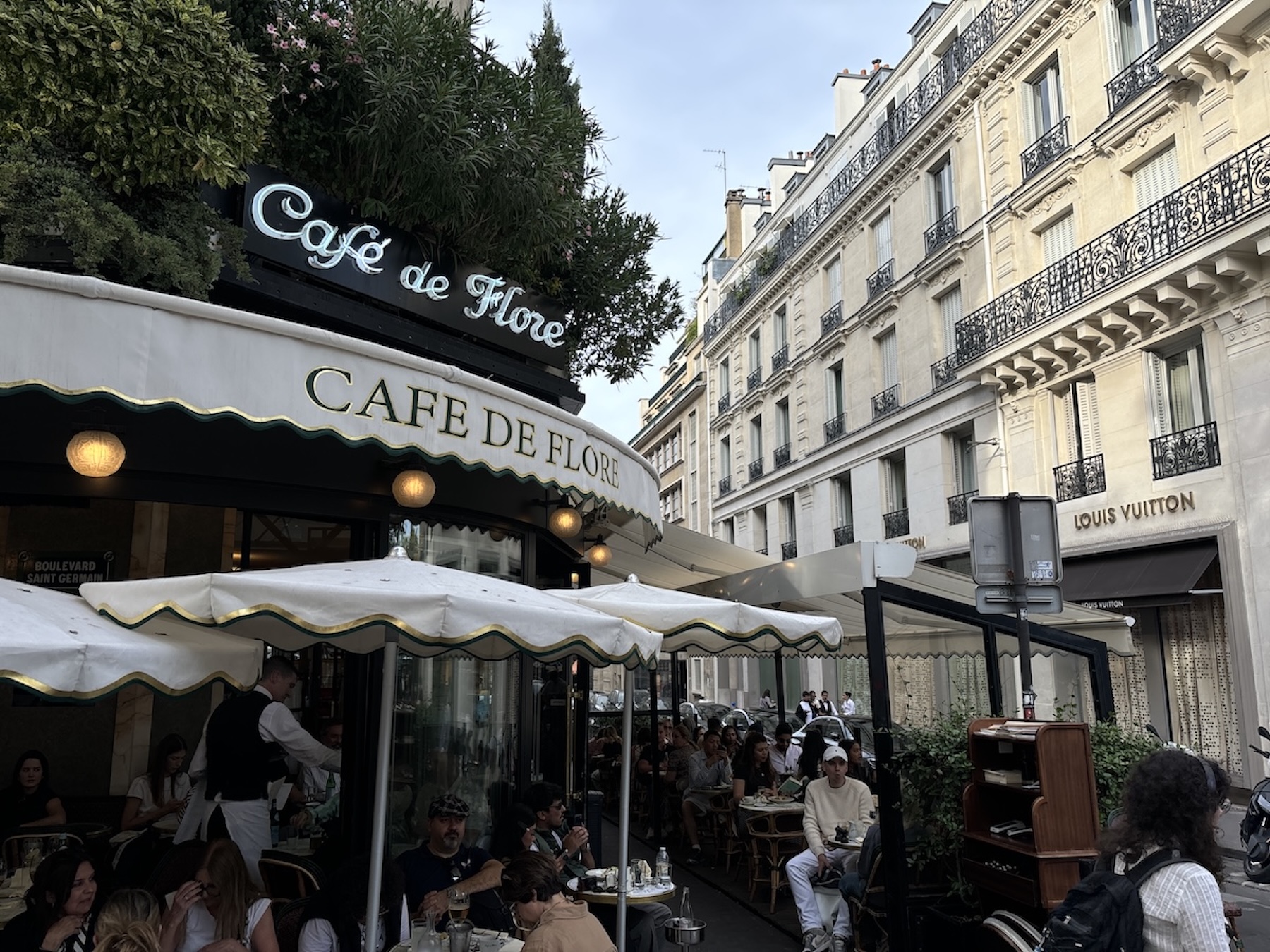
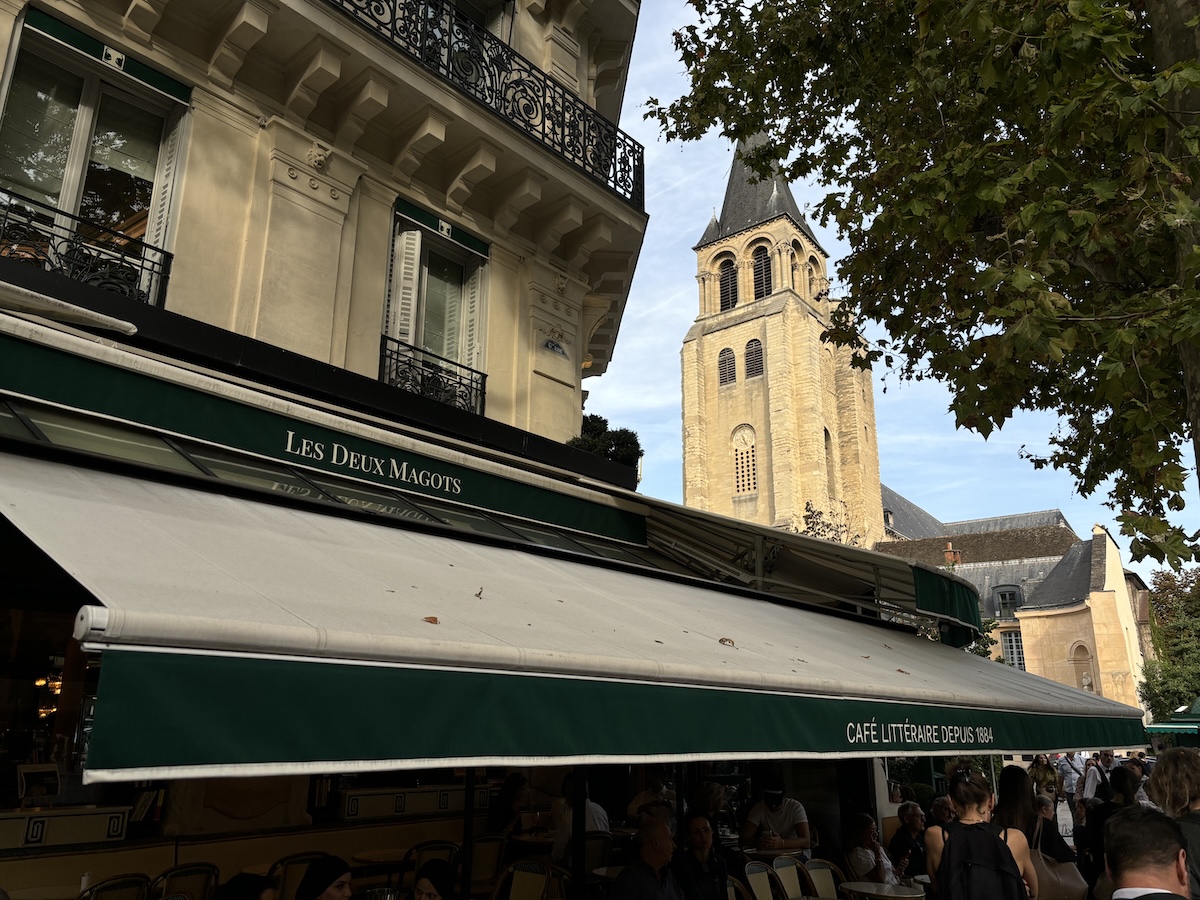
The Lost Generation coalesced around Saint-Germain-des-Prés, attracted by cheap rents and the laissez-faire energy of 1920s Paris. Less constrained by British and American censorship laws, Les Deux Magots and Café de Flore provided fertile ground for avant-garde art, literature, and poetry to flourish. Ernest Hemingway, Gertrude Stein, F Scott Fitzgerald, Picasso, and James Joyce were mainstays of the neighborhood.
Post-WWII
After the Liberation of France, cafés of Saint-Germain-des-Prés were the preferred haunts of writers, philosophers, and artists, in particular Jean-Paul Sartre and Simone de Beauvoir. Concepts like existentialism and absurdism found their home here, among a generation deeply scarred by the horrors of two world wars. It was around this time that jazz, which made its way to Paris from the United States during WWI, exploded in popularity. Saint-Germain-des-Prés became its hub, with storied venues like Caveau de la Huchette opening in 1949, and jazz greats like Thelonious Monk, Dizzy Gillespie, and Charlie Parker gracing the stages. Jazz in Paris was intimately linked with the free-thinking writers frequenting the cafés by day and clubs by night.
Today
Saint-Germain-des-Prés, located in the 6th arrondissement, is considered an upscale area of Paris, popular for art galleries and luxury boutiques. It retains some of its literary charm due to the historical and cultural significance of the philosophers, writers, and artists who once frequented Café de Flore and Les Deux Magots, the queues for which now stretch down the boulevard.
Local Tips: Café Etiquette
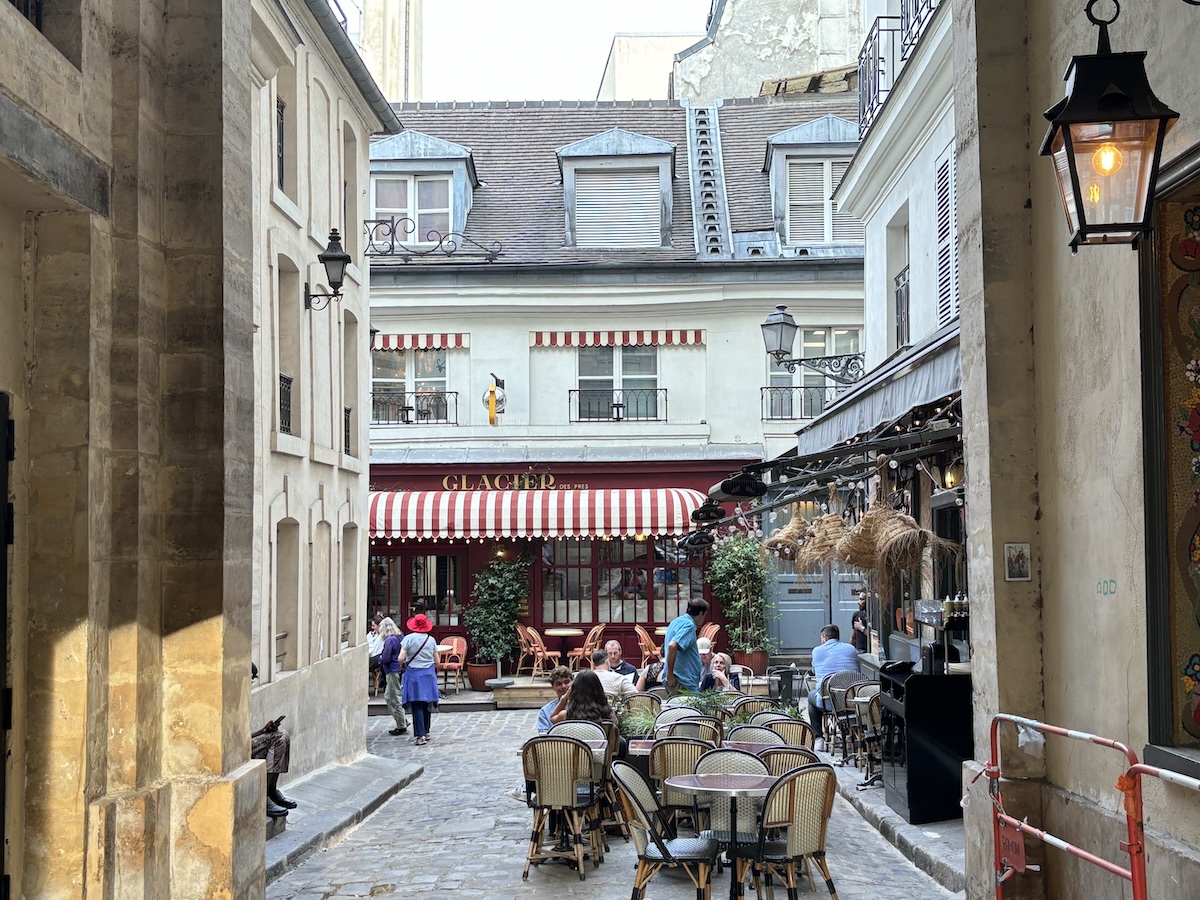
A café is not quite like a normal restaurant, so here are some tips on how to navigate the experience. If you come across a café terrace and wish to sit down à l’exterieur, it is generally acceptable to sit at a table directly (unless there is a reservation sign). If you want to sit à l’intérieur, or inside, make eye contact with someone who works at the café, say "Bonjour," and ask for a table. You can specify if you’d like to eat (pour manger) or to drink (pour boire). You can keep your table as long as you’d like. Read, chat, or just people-watch along with the other Parisians around you.
Helpful phrases:
- the essentials: "Bonjour" when you arrive and “Au revoir” when you leave
- the menu, please: "la carte, "s'il vous plaît"
- the bill, please: "l'addition, s'il vous plaît"
- and of course, "Merci beaucoup!"
Note that if you see tables set up with cutlery and glasses, those are for dining customers coming to eat lunch or dinner. If you want only a coffee or drink, sit at the tables that are not set.
Which café should you choose? That’s up to you! While some cafés have become famous due to their decor or historical significance, in my opinion, the best café experience is the one that beckons you to stay a while. Be open to stumbling upon an inviting table at just the right moment in your day to slow down and enjoy the café life.
Want to learn more about Saint-Germain-des-Prés? Join us for a walking tour with Dayin! From its roots as an abbey outside Paris, to the upscale quarter it is today, discover the characters and stories that give this historic neighborhood its distinctive charm.
Follow our Parisian adventures!
.png)


-100.avif)



.avif)
.svg)
.svg)
.svg)
.svg)